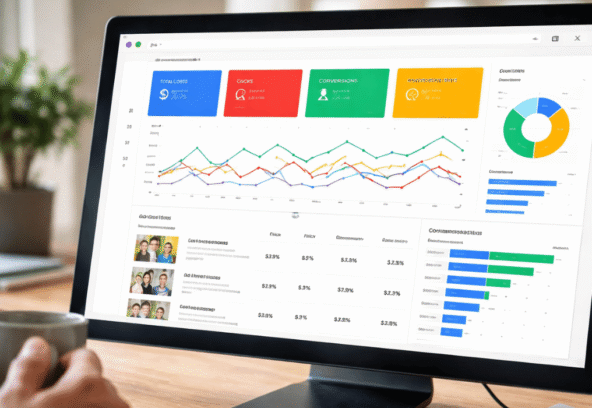



Why “Ranking Higher” Doesn’t Mean You’re Getting More Clients
Key Takeaways
- Ranking higher is not the end goal — it only increases visibility. Real success comes from turning visitors into clients.
- Traffic does not equal revenue — a large number of visitors means little if they are not interested, qualified, or ready to take action.
- Search intent matters more than search volume — attracting the right audience is far more valuable than attracting a large one.
- Conversion-focused SEO connects visibility with results — it aligns your traffic with your business goals and client acquisition.
- Your website must guide users clearly — strong messaging, clear calls-to-action, and smooth navigation drive conversions.
- Content should do more than inform — it must build trust, address concerns, and encourage users to take the next step.
- User experience directly impacts conversions — speed, mobile responsiveness, and usability can make or break results.
- Traditional SEO alone can lead to wasted effort — high rankings without conversions often mean lost time, money, and opportunities.
- Measure what truly matters — focus on leads, inquiries, and ROI instead of just rankings and traffic.
- A strategic shift is necessary — conversion-focused SEO turns your website into a consistent client-generating asset.
Every business owner wants the same thing when it comes to online visibility: rank higher on Google. It feels like the ultimate goal. After all, if your website shows up at the top, more people will see it… and more people should become clients—right?
Not exactly.
Many businesses invest months (and sometimes years) into improving their rankings, only to realize that their phone isn’t ringing any more than before. Traffic increases, impressions go up, but actual leads and sales stay flat. This disconnect can be frustrating and confusing.
The truth is simple: ranking higher doesn’t automatically mean you’re getting more clients.
In this article, we’ll break down why that happens, what most SEO strategies are missing, and how shifting to conversion-focused SEO can turn your website into a real client-generating machine—not just a traffic source. At Impactory Media, this is exactly where the focus lies: not just getting you seen, but getting you chosen.
The Illusion of Ranking
It’s easy to understand why businesses chase rankings. Seeing your website on the first page of search results feels like success. It’s visible, measurable, and competitive.
But here’s the problem: search engines are not designed to bring you clients—they are designed to provide relevant information to users.
That means your page might rank highly because it answers a question well, not because it convinces someone to buy from you.
For example, imagine you run an ABA therapy clinic. If your blog ranks for “what is ABA therapy,” you might get thousands of visitors. But most of them are just learning—they’re not ready to choose a provider yet.
This is where the illusion begins:
- High rankings create the appearance of success
- Traffic increases, but intent doesn’t match
- Businesses assume visibility equals revenue
In reality, traffic alone doesn’t pay the bills—clients do.
What “Ranking Higher” Actually Means
When your website ranks higher, it usually means a few things are working well:
- Your content matches certain keywords
- Your site has authority (backlinks, domain strength)
- Your technical SEO is solid
- Your pages are structured in a search-friendly way
All of these are important. But notice something: none of these factors directly guarantees conversions.
Ranking is about attraction. It helps people find you.
But conversion is about a decision. It determines whether they trust you, connect with you, and ultimately choose you.
Think of it like opening a shop on a busy street. A good location brings foot traffic—but if your store experience is poor, people will walk in and walk right out.
The Critical Difference: Traffic vs. Clients

Let’s simplify this:
- Traffic = People visiting your website
- Clients = People who take action (call, book, buy, inquire)
Not all traffic is equal.
You could have:
- 1,000 visitors who are just browsing
- 50 visitors who are actively looking to hire
Which group is more valuable? Clearly, the second.
Here’s where many businesses go wrong: they focus on increasing numbers without asking who those numbers represent.
A page might rank for a broad keyword and bring in a lot of clicks. But if those users:
- Aren’t in your service area
- Don’t need your service yet
- Are only looking for free information
…then they’re unlikely to become clients.
This is why the quality of traffic matters more than quantity.
Introducing Conversion-Focused SEO
This is where conversion-focused SEO comes into play. It’s not about abandoning rankings—it’s about redefining what success looks like.
Conversion-focused SEO is a strategy that prioritizes attracting the right audience and guiding them toward taking action. Instead of asking, “How can we rank higher?” the focus becomes, “How can we turn visitors into clients?”
This approach aligns your content, website structure, and messaging with the user’s intent. It ensures that when someone lands on your page, they not only find useful information but also feel confident enough to take the next step.
At its core, conversion-focused SEO bridges the gap between visibility and results.
Key Components of Conversion-Focused SEO
A structured approach that turns website visitors into real clients—not just traffic.
Understanding Your Ideal Client
Not everyone who visits your website is your ideal customer—and that’s okay. The goal is to attract the ones who are. This starts with understanding:
- Their problems
- Their urgency
- Their decision-making process
- The words they use when searching
When you align your content with real intent, your traffic becomes more meaningful.
Keyword Strategy Beyond Volume
Many businesses choose keywords based on search volume alone. But high volume doesn’t always mean high value. Conversion-focused SEO prioritizes:
- Long-tail keywords (more specific, less competition)
- Intent-driven keywords (e.g., “hire ABA therapist near me”)
- Local and service-based searches
These keywords may bring fewer visitors—but they bring the right visitors.
On-Page Optimization for Conversion
Once someone lands on your page, what happens next matters most. A well-optimized page should:
- Clearly explain what you offer
- Speak directly to the user’s problem
- Build trust quickly
- Guide the user toward a clear action
This includes strong headlines, simple messaging, and effective calls-to-action (CTAs). If your page ranks but doesn’t communicate value, users will leave.
User Experience (UX) and Site Design
Even the best content won’t convert if the experience is frustrating. Your website should:
- Load quickly
- Work smoothly on mobile devices
- Be easy to navigate
- Feel professional and trustworthy
Users make decisions fast. If your site feels confusing or slow, they won’t stick around long enough to convert.
Technical SEO for a Smooth Journey
Technical SEO often gets associated with rankings, but it also plays a key role in conversions. A well-optimized site ensures:
- No broken pages or errors
- Fast performance
- Secure browsing (HTTPS)
- Easy navigation for users and search engines
These factors create a frictionless experience, which increases the chances of conversion.
Content That Converts
Not all content is created equal. Informational content brings awareness. But conversion-focused content moves users toward action. This means your content should:
- Answer questions clearly
- Address concerns and objections
- Build authority and trust
- Offer a clear next step
Instead of just educating, your content should guide.
Why Traditional SEO Falls Short
When SEO is approached only from a ranking perspective, it often leads to missed opportunities. Businesses may invest heavily in content and optimization, only to attract visitors who have no intention of becoming customers.
This creates a situation where resources are spent on driving traffic that doesn’t deliver value. Over time, this can lead to frustration and the belief that SEO “doesn’t work,” when in reality, the strategy itself is incomplete.
Without a focus on conversions, even the best rankings can fail to produce meaningful results. Businesses may find themselves stuck in a cycle of chasing more traffic, hoping it will eventually lead to growth.
How to Shift Your Strategy
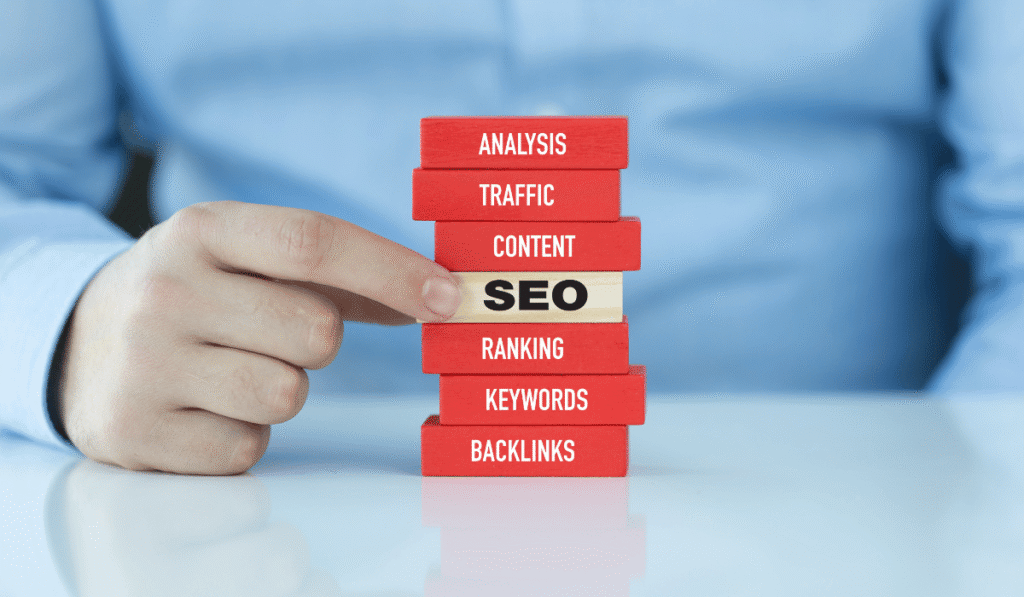
If your rankings are improving but your leads aren’t, it’s time to rethink your approach.
Start with these steps:
- Review your current SEO efforts—are you tracking conversions or just rankings?
- Look at your keywords—do they reflect user intent or just volume?
- Analyze your website—does it guide users clearly toward action?
- Improve your messaging—does it speak directly to your ideal client?
- Focus on user experience—can visitors easily navigate and trust your site?
Most importantly, shift your mindset from visibility to results.
Working with a team that understands conversion-focused SEO, like Impactory Media, can help bridge that gap between traffic and actual business growth.
Real-World Perspective
Consider two businesses in the same industry:
Business A
Ranks for broad, high-volume keywords. They get thousands of visitors each month—but very few inquiries. Their content is informative but lacks direction.
Business B
Focuses on conversion-focused SEO. They target specific, intent-driven keywords and design their pages to guide users toward action. They get fewer visitors—but significantly more leads.
Who is more successful?
Clearly, Business B.
Another example: a service provider ranks #1 for a general term but doesn’t mention pricing, location, or next steps clearly. Users leave with unanswered questions.
A competitor ranks lower but has a clear message, trust signals, and an easy booking process. Users convert there instead.
Key takeaway: Ranking didn’t decide the outcome—experience did.
Conclusion
Ranking higher is not the final goal—it’s just the beginning.
Visibility gets you noticed. But conversions drive your business forward.
If your SEO strategy is focused only on rankings, you may be missing the bigger picture. Real success comes from attracting the right audience, guiding them effectively, and turning interest into action.
That’s the power of conversion-focused SEO.
It connects visibility with results. It transforms traffic into clients. And it ensures that your digital presence actually contributes to your growth—not just your analytics dashboard.
If you’re ready to move beyond rankings and start generating real results, it’s time to rethink your approach—and work with a strategy built for conversions, not just clicks.
Frequently Asked Questions